Difference Between Aari and Sozni Work: Understanding Kashmir's Embroidery Heritage
A comprehensive guide to two of Kashmir's most celebrated embroidery traditions
Kashmir has long been celebrated as the crown jewel of Indian textile artistry, where centuries-old embroidery traditions continue to flourish in the hands of skilled artisans. Among the valley's most treasured crafts are Aari and Sozni embroidery, two distinctive needlework techniques that have adorned shawls, garments, and home furnishings for generations. While both originate from the same geographical region and share a commitment to exquisite craftsmanship, these embroidery styles differ significantly in their execution, aesthetic appeal, and cultural significance.
Understanding the nuances between these two techniques not only helps buyers make informed purchasing decisions but also deepens appreciation for the incredible skill and patience required to create these textile masterpieces. This guide explores every aspect of Aari and Sozni work, from their historical roots to the practical differences that set them apart.
What Is Aari Work? The Hook Embroidery Technique
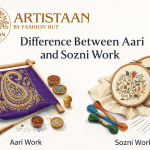
Aari work, also known as Aari embroidery or hook embroidery, is a chain stitch technique that employs a specialized hooked needle called an "aari" or "aar." This embroidery method creates continuous, flowing patterns through interlocked loops of thread, resulting in raised, textured designs that stand prominently on the fabric surface.
Quick Answer: Aari work uses a hooked needle to create chain stitches from below the fabric, producing faster, more raised embroidery with bold patterns and often incorporating embellishments like beads and sequins.
Historical Origins of Aari Embroidery
The Aari technique traces its roots to the Mughal era when artisans from Persia and Central Asia brought this craft to the Indian subcontinent. Initially practiced in regions like Gujarat and Rajasthan, the technique eventually made its way to Kashmir, where local craftspeople adapted it to complement their existing textile traditions. The word "aari" derives from the Hindi word for the hooked needle, which resembles a cobbler's awl.
The Aari Embroidery Process
Aari work requires the fabric to be tightly stretched on a wooden frame called an "adda." The artisan sits beside the frame and works with both hands simultaneously: one hand guides the hooked needle from above while the other feeds the thread from below. This coordinated movement creates a continuous chain of loops that form intricate patterns.
The technique allows for relatively faster work compared to other hand embroidery methods, though it still demands considerable skill and precision. Artisans can incorporate various embellishments including beads, sequins, stones, and metallic threads directly into the embroidery as they work, creating richly decorated textiles.
Characteristic Features of Aari Work
Aari embroidery exhibits several distinctive characteristics:
- Raised texture: The chain stitches create a prominent three-dimensional effect on the fabric surface
- Continuous lines: Patterns flow smoothly without breaks, as the chain stitch technique allows for uninterrupted work
- Bold designs: Aari work typically features larger, more dramatic motifs with striking visual impact
- Embellishment-friendly: The technique easily accommodates beads, sequins, and other decorative elements
- Faster production: Compared to needle embroidery, Aari work progresses more quickly
Understanding Sozni Embroidery: The Art of Fine Needlework
Sozni work represents the pinnacle of Kashmir's traditional embroidery heritage. This meticulous needlework technique uses a fine needle (called "sozni" in Kashmiri) to create delicate, intricate patterns through various hand stitches. The term "sozni" literally translates to "needle" in the Kashmiri language, highlighting the centrality of this simple tool to the craft.
Quick Answer: Sozni work uses a regular fine needle with various hand stitches to create flat, detailed embroidery characterized by exceptional precision, subtle elegance, and intricate patterns that often resemble fine paintings on fabric.
The Heritage of Sozni Craftsmanship
Sozni embroidery has been practiced in Kashmir for over five centuries, representing one of the region's oldest and most revered textile traditions. This craft flourished particularly during the 15th and 16th centuries when Kashmir shawls gained international recognition. European aristocracy and Asian royalty coveted these exquisitely embroidered textiles, establishing Kashmir's reputation as a center of supreme craftsmanship.
The technique has been passed down through generations of artisan families, with many craftspeople beginning their training in childhood to develop the extraordinary hand-eye coordination and patience required for this demanding work.
How Sozni Embroidery Is Created
Unlike Aari work, Sozni embroidery does not require a frame. Artisans typically work with the fabric draped over their laps or hands, using a regular fine needle to execute various stitches from the top of the fabric. The primary stitch used is the stem stitch, which creates smooth, flowing lines that can form incredibly detailed patterns.
The process is exceptionally time-intensive. A single Sozni-embroidered shawl can take anywhere from several months to several years to complete, depending on the complexity and coverage of the design. Artisans work with painstaking precision, often completing only a few square centimeters per day on densely embroidered pieces.
Distinctive Qualities of Sozni Work
Sozni embroidery is recognized by several hallmark features:
- Flat, smooth finish: The embroidery lies flush with the fabric, creating an almost painted appearance
- Intricate detailing: Sozni work excels at rendering extremely fine patterns, including delicate florals and paisley motifs
- Color gradation: Skilled artisans use subtle color transitions to create depth and dimension
- Reversible quality: Authentic Sozni work often looks nearly identical on both sides of the fabric
- Time-intensive: The technique requires extraordinary patience and skill, making it considerably slower than Aari work
Key Differences Between Aari and Sozni Work
While both techniques produce beautiful embroidered textiles, the differences between Aari and Sozni work are substantial and affect everything from appearance to price point.
Tool and Technique Variations
The most fundamental difference lies in the tools used. Aari work employs a hooked needle resembling an awl, which creates chain stitches by pulling thread from below the fabric. The artisan works with both hands, one above and one below the stretched fabric. Sozni work uses a standard fine needle, with the artisan working from above the fabric using traditional hand stitches, primarily the stem stitch.
Visual and Textural Differences
Aari embroidery creates a raised, three-dimensional surface with bold, continuous patterns. The chain stitches stand prominently on the fabric, producing a textured feel. Sozni embroidery, conversely, lies flat against the fabric with no raised texture. The patterns appear more delicate and refined, often resembling fine watercolor paintings transferred to cloth.
Design Complexity and Style
Aari work typically features larger, bolder motifs with striking visual impact. The technique lends itself well to dramatic designs, often incorporating extensive use of embellishments. Sozni work excels at rendering intricate, detailed patterns with exceptional precision. Traditional Kashmiri motifs like chinar leaves, almond-shaped paisleys, and elaborate floral arrangements are executed with extraordinary fineness in Sozni embroidery.
Time Investment and Craftsmanship
The speed of execution differs dramatically between these techniques. Aari work, while still requiring considerable skill, progresses relatively faster because the chain stitch technique covers area more quickly. A moderately embroidered Aari piece might take weeks to complete. Sozni work demands extraordinary patience and time investment. Complex Sozni shawls can require six months to several years of continuous work, with artisans completing only small sections daily.
Price Point and Market Value
Due to the time-intensive nature and exceptional skill required, Sozni embroidery typically commands higher prices than Aari work. An authentic, densely embroidered Sozni shawl can cost several thousand dollars or more, reflecting the months or years of labor invested. Aari work, while still valuable and requiring skill, is generally more accessible in terms of pricing due to faster production times.
Comparison at a Glance
| Aspect | Aari Work | Sozni Work |
|---|---|---|
| Tool | Hooked needle (aari) | Regular fine needle |
| Stitch Type | Chain stitch | Stem stitch primarily |
| Texture | Raised, 3D effect | Flat, smooth finish |
| Design Style | Bold, dramatic patterns | Intricate, delicate motifs |
| Production Speed | Relatively faster | Very time-intensive |
| Typical Price | Moderate to high | High to very high |
How to Identify Authentic Kashmiri Embroidery
With the proliferation of machine-made imitations and lower-quality replicas, knowing how to identify genuine hand-embroidered Kashmiri textiles has become essential for discerning buyers.
Examining the Back of the Fabric
Authentic hand embroidery shows clear stitch work on the reverse side. In genuine Sozni work, the back often mirrors the front with remarkable similarity, though with visible thread passages and knots. Aari work displays chain stitch loops on the reverse. Machine embroidery typically shows a tangled, mesh-like appearance on the back with no clear individual stitches.
Assessing Stitch Consistency
Hand embroidery exhibits slight, natural variations in stitch size and tension—evidence of human craftsmanship. Machine work produces unnaturally perfect, uniform stitches with mechanical precision. These subtle imperfections in hand work are actually marks of authenticity and artisanal value.
Checking Thread Quality and Color
Authentic Kashmiri embroidery uses high-quality threads, often silk or fine wool, with rich, natural-looking colors. The threads should have depth and luster. Poor-quality imitations often use synthetic threads with flat, artificial-looking colors that may bleed or fade quickly.
Understanding Price Indicators
Genuine hand-embroidered Kashmiri textiles require significant time and skill, which is reflected in their pricing. If a heavily embroidered shawl or garment is offered at an unusually low price, it likely indicates machine work or inferior craftsmanship. While this doesn't mean authentic pieces must be unaffordable, understanding the labor investment helps set realistic price expectations.
The Cultural Significance of Kashmiri Embroidery
Both Aari and Sozni work represent far more than decorative techniques—they embody centuries of cultural heritage, artistic expression, and economic sustenance for countless artisan families in Kashmir.
Preserving Traditional Livelihoods
These embroidery traditions provide employment and income for thousands of families across Kashmir. Many artisans have inherited their skills through generations, with entire families involved in various stages of production—from designing patterns to executing the embroidery. Supporting authentic Kashmiri embroidery helps preserve these traditional livelihoods and sustains communities that depend on this craft.
Artistic Expression and Identity
The motifs and patterns used in Kashmiri embroidery draw from the region's natural beauty—the chinar leaves that turn golden in autumn, the almond trees that bloom in spring, and the intricate floral gardens that have inspired artists for centuries. These designs connect the craft to Kashmir's landscape and cultural identity, making each piece a representation of the valley's aesthetic traditions.
Global Recognition and Contemporary Relevance
Kashmiri embroidery has received geographical indication status, recognizing its unique origin and traditional methods. Contemporary designers increasingly incorporate these traditional techniques into modern fashion, creating a bridge between heritage craftsmanship and contemporary aesthetics. This fusion helps keep the traditions alive while making them relevant to new generations.
Caring for Your Embroidered Kashmir Textiles
Proper care ensures that these exquisite textiles remain beautiful for generations, preserving both their aesthetic appeal and their value as artisanal works.
Cleaning and Maintenance
Hand-embroidered Kashmiri textiles should generally be dry-cleaned by professionals experienced with delicate embroidery. If hand washing is necessary, use cold water with mild, pH-neutral soap, gently pressing rather than wringing the fabric. Never use harsh detergents or bleach, as these can damage both the fabric and the embroidery threads.
Storage Recommendations
Store embroidered textiles in breathable cotton bags rather than plastic, which can trap moisture and lead to mildew. Keep them in cool, dry places away from direct sunlight, which can fade colors over time. For heavily embroidered pieces, avoid tight folding that might stress the embroidery threads; instead, roll them gently or fold along natural drape lines.
Preventing Damage
Protect embroidered areas from snags by being mindful of jewelry, rough surfaces, and sharp objects. For garments, consider the embroidery placement when wearing—heavily embroidered areas subjected to frequent friction may wear faster. Use cedar or lavender sachets to deter moths, which can damage natural fibers and threads.
Making an Informed Purchase Decision
Choosing between Aari and Sozni embroidered pieces depends on several personal factors, from aesthetic preference to budget considerations.
When to Choose Aari Work
Aari embroidery suits those who appreciate bold, dramatic designs with textural interest. The raised chain stitches create visual impact, making Aari work ideal for statement pieces like evening shawls, decorative cushions, or festive garments. The relatively faster production time also makes Aari work more accessible in terms of pricing, offering beautiful hand embroidery at a more moderate investment level.
When to Choose Sozni Work
Sozni embroidery appeals to those who value extreme refinement, intricate detailing, and subtle elegance. The flat, delicate stitching creates an understated luxury suitable for classic pieces intended as heirlooms or investment purchases. Collectors and connoisseurs particularly value fine Sozni work for its artistic merit and the extraordinary skill required to execute it.
Questions to Ask Sellers
When purchasing Kashmiri embroidery, ask about the technique used, the approximate time invested in creating the piece, the type of threads and fabric employed, and whether the work is entirely hand-done or combines machine and hand work. Reputable sellers will readily provide this information and may even share details about the artisans who created the piece.
The Future of Traditional Kashmiri Embroidery
As with many traditional crafts worldwide, Kashmiri embroidery faces both challenges and opportunities in the modern era. Younger generations increasingly pursue education and careers outside traditional crafts, creating concerns about skill transmission and craft continuity. Economic pressures and the time-intensive nature of this work make it difficult for artisans to earn sustainable livelihoods, particularly when competing with machine-made alternatives.
However, growing global appreciation for handmade, sustainable products has created new markets for authentic Kashmiri embroidery. Digital platforms enable artisans to reach customers directly, potentially improving their income. Design collaborations between traditional craftspeople and contemporary designers are creating innovative products that honor traditional techniques while appealing to modern aesthetics.
Geographical indication protection and increased awareness about craft authenticity help distinguish genuine Kashmiri embroidery from imitations. Organizations working to document traditional patterns, train new artisans, and create fair trade connections are helping ensure these remarkable skills continue for future generations.
Conclusion: Appreciating Kashmir's Embroidery Traditions
The difference between Aari and Sozni work extends beyond mere technique—it represents two distinct artistic approaches within Kashmir's rich embroidery heritage. Aari work offers bold, textured beauty with its raised chain stitches and dramatic patterns, while Sozni embroidery showcases the pinnacle of needlework refinement with its flat, incredibly detailed stitching.